Wednesday, 10 December 2014

Poverty Porn

I disagree with the concept of poverty porn TV. i believe that it exploits those in harsh conditions with false expectations of an improved lifestyle as a result of participation in the shows, they are filmed for a pure entertainment factor and are represented in the worst way the use of footage editing highlights the extreme and worsts aspects of their lives, this diminishes the true reality of their financial and economic situation. The target audiences for shows such as SKINT and Benefit Street are those who can relate to the stars in the shows e.g. lower classes or those in financial poverty situations and those of middle class background who sum up the rest of the viewership for channel 4. I believe that those from more moderate backgrounds watch poverty porn TV for a sense of entertainment to see how the rest of Britain live and how these almost 'fictitious' characters deal with their lives and struggles. Despite the programming being presented in a somewhat informative manner to educate the viewership on the other half of the British population's hardships, i believe that this is just a method of self-censorship to conceal the lack of moral concern for those depicted in the programs. Clear exploitation is apparent; dragging the concept of an informative program over multiple seasons and episodes weakening the message; turning the concept of poverty porn in to a method of entertainment for TV consumption.

Further evidence of the entertainment factor is the use of editing the footage. This allows editors to pick and choice aspects and events within the lives of those in the show to glamorize their misfortunes. As a view i share no similarities with those in the show therefore I cannot relate to their struggles the show only fulfils my gratefulness of my own live, some may take the show and look down upon those on SKINT or benefit street.

Wednesday, 26 November 2014

Posh People: Tatler problems

Tatler magazine and the Posh lifestyle
Tatler is a glossy fashion and lifestyle magazine that has been in circulation since the 18th century. Tatler is a 'go to' for the upper classes, whether it is finding fashion advice for the changing seasons or latest gossip on the rich and famous of Britain. However despite its huge national readership it faces many issues on how it defines its views on culture and class systems' within Britain and the UK. After viewing the BBC 'fly on the wall' documentary 'Posh People: Inside Tatler’ it is clear how the editors, journalists and staff of the publication are defined by their culture, education and class. Tatler only focuses its importance of the rich and famous of the upper classes. This shows not only in what they write and publish but even in the staff in which they hire; Tatler deems importance on social status and it pushed on their employees, who come from the poshest boarding schools, the highest education and most privileged background. However those who lack in the adequacy of the company are given a complimentary guide to etiquette and modern manners handbook to revise. This demand of their employees most certainly influences the content of the magazine. Throughout the Documentary there is an underlining theme of improvement, especially for those who are not quite up to the highest standard of Tatler, they define themselves as the "gatekeeper of the upper class" the 21st century sees a more broader audiences for Tatler it is no longer just for the social elites. As a result Tatler sees this as their responsibility to improve the readership. They feature guides and tips on how you can tweak your identity through fashion advice and matrix's on People and objects you should surround yourself with to appear to be of a higher class. Furthermore the journalism that is carried out on the ‘non-posh’ lifestyle is abundant. There is a part within the documentary where a journalist is sent out to a local Poundland, she is shocked by the content in which you can purchase for £1, this highlights the lack of integration between of class systems at Tatler and how those of lower status acquire a certain stereotype by the ‘posh’. However this integration and lack of communication of class systems doesn’t just define Tatler it also representative of the majority of the upper class society, as portrayed by the documentary. Additionally despite integration of different Race ethnicities there is still stereotypes drawn by upper classes for example in the case of Kola Karim shown by the BBC as a Nigerian millionaire living in West- London, he made his fortune through African oil trades and construction companies however is still questioned by many how he obtained his money many assume due to the colour of his skin he is a sports star or athlete. These generalisations and stereotypes are created from the segregation, miscommunication and false representation of society, which is stirred and fuelled from publications such as Tatler who are reluctant to leave their ‘posh bubble’.
    

http://www.bbc.co.uk/iplayer/episode/b04q0wwg/posh-people-inside-tatler-episode-1

Wednesday, 19 November 2014

Non verbal communication

TED TALK: Amy Cuddy

Amy cuddy a social psychologist who speaks on her research on how our nonverbal behaviour affects our lives in more ways in which we initially realise. Also on how minor tweaks can benefit our perspective and behaviour towards life essentials, such as work. Nonverbal’s can influence how others judge us and how we judge others for example an individual with poor posture and who avoids eye contact can be judged negatively as someone who is lazy or lacks interest. Secondly our own body language  influences our perspective towards life and our physiology. She believes that choosing to adopt a more positive attitude towards nonverbal commination or “faking it” can help us progress and improve our own self-esteem while motivating us. She claims that there are two different types of attitudes towards body language: High Power and Low Power. People who adopt a higher power are more involved in discussions, more upbeat, more motivated and tend to have higher success rates. While in contrast people who adopt a lower power are more reserved, less confident, less involved and tend to not succeed at a higher rate than those with a higher power attitude. She has identified the different ways in which people communicate what type of power they fall under, through the study of Kinesics (body movement) these ways of communication can consist of :
·         Gestures
·         Facial expressions
·         Body Posture
·         Body Movement (nods, shrugs..etc.)  

Furthermore she has identified methods in which you can improve the way in which you communicate with others and achieve a higher power attitude, this will lead you to a happier more driven, be more optimistic and succeed in life. Power posing is a technique she has developed and studied under the acts of power posing. These acts include: Standing in a wide or assertive manner e.g. hands on your hips or open wide arms, sitting straight while seated,holding your arms behind your head etc.. . Adopting this small routine of using power poses while “Faking” a more confident attitude in your everyday life will actually have a positive effect on your mind. As a result you will embrace the positivity and it will become a more natural behaviour, guiding you to take more risks and live a happier and more successful life.   

Sunday, 9 November 2014

Sub-cultures: MODS

https://www.facebook.com/video.php?v=717995938279225&pnref=story
Fred Perry's short documentary clip on the evolution of the British Mod sub-culture group, with influences of music, fashion and current affairs spanning the late 1950's up until the early 1970's

Wednesday, 5 November 2014

Seven Concepts

Key Concepts in Comms. (Communtication & Culture) 
Communication: a process through which meanings are exchanged.  
Context: the situation within which communication takes place.  
Culture: a particular way of life which expresses certain meanings and values.  
Identity: the sense we have of ourselves, which we then ‘represent’ ‘elsewhere’: a  
person’s social meaning.  
Power: control and influence over other people and their actions.  
Representation: refers to the construction in any medium (especially the mass  
media) of aspects of ‘reality’ such as people, places, objects, events, cultural  
identities and other abstract concepts. Such representations may be in speech or  
writing as well as still or moving pictures. (Daniel Chandler’s definition).  
Value: the worth, importance, or usefulness of something to somebody. 


Sub-Cultural groups are sensitive to contemporary trends in fashion,style and music.

A sub-culture group is a group of individuals who interact socially with each other and who are recognisable to outsiders as being a part of a group, for example ‘punks’ are a western sub-culture group that have evolved from the punk rock music genre. A ‘punks’ syntagm collectively is stereotypically rebellious and anti-establishment, outsiders can identify this through signifiers such as: rough/baggy clothes, shaved or spiked hair styles and usually an abundance of piercings. 
All groups consist of individuals with individual needs. Certain needs can be fulfilled within a social group.
The ‘punk’ genre is distinguished as it can fulfil multiple needs for an individual especially as adolescence, this is the period in which we grow socially and begin to associate ourselves with others while trying to rebel and break away from the elder authoritarianism life style. For example we look for trends within our needs such as in fashion, music and style and look to satisfy these needs when joining a group. Those who associate themselves with a sub-culture group can achieve a sense of belonging and loyalty from joining which in effect can boost an individual’s self-esteem when expressing aspects of their identity around those who share similarities. As spoken by Nicholson “we as people are attracted to those who share common interests”, these similarities can evolve and are contemporary to trends. Trends are significant when identifying groups they also act as a barrier between groups isolating them from each other each. However as the dawn of technology has took grasp on society it has become harder to distinguish social groups in public situations especially within teenage groups like socially and being active tend to take place online. 

As teenagers we strive to be socially accepted, however culture groups establish themselves on a set of culture codes these codes can vary between culture-groups they tend to focus around solidarity of the group. The punk ideology is cantered around not caring for authority and regularly socially at venues such as music events.       


Wednesday, 8 October 2014

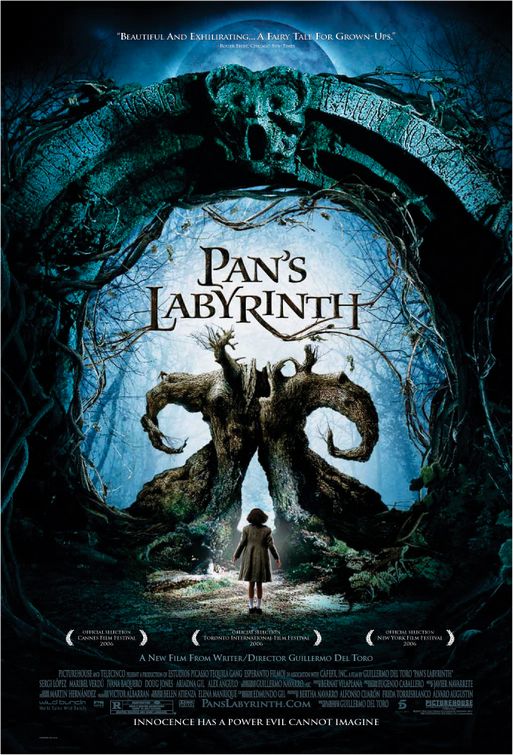
Semiotics: Analysis Of Movie Posters

Semiotics is the study of signs and symbols, all posters use semiotics to communicate with the public and their audiences. Communication is composed of three aspects “Sender” (someone who is trying to address a message or initiate communication), the “message” (the subject of communication; what the sender is communicating to others) and “receiver” (the person who accepts the message and interprets what is being communicated).  For example Movie posters use a set of imagery and symbols known as paradigm to convey the message of their film to the audiences. Signs all have different connotations, the connotation is the implied meaning behind the sign collectively a set of signs are more commonly known as a “syntagm” connotations of signs can vary between cultures. Movie posters use signs to create a syntagm for their movie, movie posters use more closed text compared to more open text posters; the term “open and closed text” was coined by Umberto Eco, open text leave more to the receivers imagination these are more abstract texts and can be interpreted in multiple ways unlike closed texts that have only one message.    
https://blogger.googleusercontent.com/img/proxy/AVvXsEgPADL290xdyLD42Fh5kxMza_UmYeOIjnnFL5BeG2Ht1ANqvOyXKMXZbKIZ2N7pCbD92tKOVPTC3bHfPqxP5_1B0JVc74l90IJtw_5ukS7UcHX3HANVEhpLQvHxM0pVoosdukgszPLjI30ky7bkKolZxE8FwLVVNlEfYLOHfQ=

Multiple signs and symbols can be found in movie posters we use these interpret the genre and the style of the movie. This movie poster has:
A young girl, connotations of this can be youth, purity and peace.
A Dead tree which has connotations of death, decay, neglect.
Night time setting which signifies horror, fear, lost, absence.
Gothic stoneworking usually has connotations of the horror genre.

   
The poster’s use of signs creates an idea of its message for example  little girl leads us to believe that this movie is a children’s film due to its associations with purity and vulnerability however her positioning in the poster hints us to believe she is lost or she is somewhere she shouldn’t be. The scenery reinforces this idea the dead trees and dark weather links to a horror genre or a place that has connotations of unhappiness and dismay. The lighting in the middle of the poster is seen to be enticing and alluring however due to the message given off from the scenery it leads us to believe that danger is lurking, the message of the poster can be signified as a horror or dark film.